

How To Fix Windows Startup Repair
This browser is no longer supported.
Upgrade to Microsoft Edge to have advantage of the latest features, security updates, and technical support.
Advanced troubleshooting for Windows boot problems
Attempt our Virtual Agent - It can help y'all chop-chop identify and gear up mutual Windows kick bug
Note
This article is intended for use past support agents and IT professionals. If you're looking for more general data about recovery options, see Recovery options in Windows 10.
Summary
There are several reasons why a Windows-based figurer may accept problems during startup. To troubleshoot kicking problems, first determine in which of the following phases the estimator gets stuck:
| Stage | Boot Process | BIOS | UEFI |
|---|---|---|---|
| one | PreBoot | MBR/PBR (Bootstrap Lawmaking) | UEFI Firmware |
| 2 | Windows Boot Manager | %SystemDrive%\bootmgr | \EFI\Microsoft\Boot\bootmgfw.efi |
| 3 | Windows Bone Loader | %SystemRoot%\system32\winload.exe | %SystemRoot%\system32\winload.efi |
| 4 | Windows NT Os Kernel | %SystemRoot%\system32\ntoskrnl.exe |
i. PreBoot
The PC's firmware initiates a Ability-On Self Test (POST) and loads firmware settings. This pre-boot process ends when a valid system disk is detected. Firmware reads the master boot record (MBR), and then starts Windows Boot Managing director.
2. Windows Boot Manager
Windows Kick Manager finds and starts the Windows loader (Winload.exe) on the Windows kicking division.
3. Windows operating organization loader
Essential drivers required to starting time the Windows kernel are loaded and the kernel starts to run.
four. Windows NT Bone Kernel
The kernel loads into memory the organization registry hive and other drivers that are marked as BOOT_START.
The kernel passes command to the session manager procedure (Smss.exe) which initializes the system session, and loads and starts the devices and drivers that aren't marked BOOT_START.
Here'southward a summary of the boot sequence, what will be seen on the display, and typical boot bug at that point in the sequence. Before starting troubleshooting, yous take to understand the outline of the boot procedure and brandish status to ensure that the issue is properly identified at the beginning of the engagement.
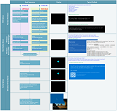
Click to enlarge
Each stage has a different approach to troubleshooting. This commodity provides troubleshooting techniques for problems that occur during the first three phases.
Note
If the computer repeatedly boots to the recovery options, run the following control at a command prompt to break the cycle:
Bcdedit /fix {default} recoveryenabled no
If the F8 options don't work, run the following command:
Bcdedit /set {default} bootmenupolicy legacy
BIOS phase
To determine whether the system has passed the BIOS phase, follow these steps:
-
If there are any external peripherals connected to the computer, disconnect them.
-
Bank check whether the hd light on the concrete computer is working. If it's not working, this dysfunction indicates that the startup process is stuck at the BIOS phase.
-
Printing the NumLock key to run into whether the indicator light toggles on and off. If it doesn't toggle, this dysfunction indicates that the startup process is stuck at BIOS.
If the system is stuck at the BIOS stage, there may be a hardware problem.
Boot loader phase
If the screen is black except for a blinking cursor, or if you receive ane of the post-obit fault codes, this condition indicates that the boot process is stuck in the Boot Loader phase:
- Boot Configuration Data (BCD) missing or corrupted
- Kicking file or MBR corrupted
- Operating arrangement Missing
- Boot sector missing or corrupted
- Bootmgr missing or corrupted
- Unable to kick due to system hive missing or corrupted
To troubleshoot this trouble, utilise Windows installation media to start the figurer, printing Shift+F10 for a command prompt, and so use any of the following methods.
Method 1: Startup Repair tool
The Startup Repair tool automatically fixes many common problems. The tool as well lets you quickly diagnose and repair more than complex startup problems. When the computer detects a startup problem, the estimator starts the Startup Repair tool. When the tool starts, it performs diagnostics. These diagnostics include analyzing startup log files to determine the cause of the trouble. When the Startup Repair tool determines the crusade, the tool tries to fix the problem automatically.
To do this job of invoking the Startup Repair tool, follow these steps.
-
Start the system to the installation media for the installed version of Windows. For more information, see Create installation media for Windows.
-
On the Install Windows screen, select Side by side > Repair your estimator.
-
On the Choose an pick screen, select Troubleshoot.
-
On the Advanced options screen, select Startup Repair.
-
Afterwards Startup Repair, select Shutdown, then plow on your PC to see if Windows can boot properly.
The Startup Repair tool generates a log file to help you sympathize the startup problems and the repairs that were made. Yous tin detect the log file in the following location:
%windir%\System32\LogFiles\Srt\Srttrail.txt
For more information, run across A Stop error occurs, or the calculator stops responding when you try to start Windows Vista or Windows 7
Method 2: Repair Boot Codes
To repair kicking codes, run the post-obit control:
BOOTREC /FIXMBR To repair the boot sector, run the following command:
BOOTREC /FIXBOOT Note
Running BOOTREC together with Fixmbr overwrites only the master boot code. If the abuse in the MBR affects the partitioning table, running Fixmbr may not fix the problem.
Method iii: Fix BCD errors
If you receive BCD-related errors, follow these steps:
-
Scan for all the systems that are installed. To do this step, run the following command:
Bootrec /ScanOS -
Restart the reckoner to check whether the problem is fixed.
-
If the trouble isn't fixed, run the post-obit commands:
bcdedit /export c:\bcdbackup attrib c:\kick\bcd -r -southward -h ren c:\kicking\bcd bcd.old bootrec /rebuildbcd -
Restart the organisation.
Method four: Supplant Bootmgr
If methods 1, 2 and 3 don't set the problem, replace the Bootmgr file from bulldoze C to the System Reserved division. To exercise this replacement, follow these steps:
-
At a command prompt, alter the directory to the Organisation Reserved partition.
-
Run the attrib command to unhide the file:
attrib -r -s -h -
Navigate to the organisation bulldoze and run the same command:
attrib -r -s -h -
Rename the Bootmgr file as Bootmgr.old:
ren c:\bootmgr bootmgr.onetime -
Navigate to the system bulldoze.
-
Copy the Bootmgr file, and then paste information technology to the Organization Reserved partition.
-
Restart the estimator.
Method 5: Restore System Hive
If Windows tin can't load the system registry hive into retention, you must restore the system hive. To do this step,, utilise the Windows Recovery Environment or use Emergency Repair Disk (ERD) to copy the files from the C:\Windows\System32\config\RegBack to C:\Windows\System32\config.
If the trouble persists, you lot may want to restore the system state fill-in to an alternative location, and so retrieve the registry hives to be replaced.
Note
Starting in Windows x, version 1803, Windows no longer automatically backs upwardly the organisation registry to the RegBack folder.This modify is by design, and is intended to help reduce the overall disk footprint size of Windows. To recover a system with a corrupt registry hive, Microsoft recommends that you use a system restore signal. For more details, check this article
Kernel Phase
If the system gets stuck during the kernel phase, you feel multiple symptoms or receive multiple mistake messages. These error messages include, simply aren't express to, the following examples:
-
A Stop mistake appears afterward the splash screen (Windows Logo screen).
-
Specific fault code is displayed.
For example, "0x00000C2" , "0x0000007B" , "inaccessible boot device" and then on.
- Advanced troubleshooting for Stop error 7B or Inaccessible_Boot_Device
- Advanced troubleshooting for Event ID 41 "The system has rebooted without cleanly shutting downwards beginning"
-
The screen is stuck at the "spinning bicycle" (rolling dots) "organisation busy" icon.
-
A blackness screen appears later on the splash screen.
To troubleshoot these problems, try the post-obit recovery boot options ane at a time.
Scenario 1: Effort to start the computer in Safe mode or Terminal Known Good Configuration
On the Advanced Boot Options screen, try to showtime the computer in Safe Way or Prophylactic Fashion with Networking. If either of these options works, use Event Viewer to help identify and diagnose the cause of the kicking problem. To view events that are recorded in the result logs, follow these steps:
-
Apply ane of the following methods to open up Event Viewer:
-
Click First, point to Authoritative Tools, and then click Event Viewer.
-
Start the Effect Viewer snap-in in Microsoft Management Console (MMC).
-
-
In the console tree, expand Issue Viewer, and then click the log that you want to view. For example, click System log or Application log.
-
In the details pane, double-click the effect that you lot desire to view.
-
On the Edit menu, click Copy, open a new document in the plan in which yous desire to paste the event (for example, Microsoft Discussion), and then click Paste.
-
Employ the Up Arrow or Down Arrow key to view the description of the previous or next outcome.
Clean boot
To troubleshoot problems that affect services, exercise a clean boot by using Organisation Configuration (msconfig). Select Selective startup to test the services one at a time to decide which 1 is causing the trouble. If you lot can't notice the cause, try including arrangement services. Withal, in nigh cases, the problematic service is third-party.
Disable any service that you find to exist faulty, and try to start the computer again by selecting Normal startup.
For detailed instructions, see How to perform a clean boot in Windows.
If the computer starts in Disable Driver Signature mode, start the computer in Disable Commuter Signature Enforcement mode, and so follow the steps that are documented in the following commodity to determine which drivers or files crave commuter signature enforcement: Troubleshooting boot problem caused by missing driver signature (x64)
Note
If the computer is a domain controller, effort Directory Services Restore mode (DSRM).
This method is an important stride if you encounter Stop error "0xC00002E1" or "0xC00002E2"
Examples
Warning
Serious problems might occur if yous change the registry incorrectly by using Registry Editor or past using another method. These bug might require that you reinstall the operating system. Microsoft cannot guarantee that these problems can be solved. Change the registry at your own risk.
Error code INACCESSIBLE_BOOT_DEVICE (STOP 0x7B)
To troubleshoot this Cease error, follow these steps to filter the drivers:
-
Go to Windows Recovery Environment (WinRE) by putting an ISO disk of the system in the disk drive. The ISO should be of the aforementioned version of Windows or a later version.
-
Open the registry.
-
Load the organisation hive, and name information technology as "test."
-
Under the post-obit registry subkey, cheque for lower filter and upper filter items for Non-Microsoft Drivers:
HKEY_LOCAL_MACHINE\Arrangement\ControlSet001\Command\Class
-
For each third-party driver that y'all locate, click the upper or lower filter, and then delete the value data.
-
Search through the whole registry for similar items. Process as an appropriate, and then unload the registry hive.
-
Restart the server in Normal fashion.
For more troubleshooting steps, run across the following articles:
- Advanced troubleshooting for Finish error 7B or Inaccessible_Boot_Device
To ready problems that occur after you install Windows updates, check for pending updates by using these steps:
-
Open a Command Prompt window in WinRE.
-
Run the control:
DISM /image:C:\ /get-packages -
If at that place are any pending updates, uninstall them by running the following commands:
DISM /prototype:C:\ /remove-packet /packagename: proper name of the packageDISM /Paradigm:C:\ /Cleanup-Image /RevertPendingActionsTry to kickoff the computer.
If the computer doesn't outset, follow these steps:
-
Open A Command Prompt window in WinRE, and start a text editor, such as Notepad.
-
Navigate to the system drive, and search for windows\winsxs\pending.xml.
-
If the Pending.xml file is found, rename the file as Pending.xml.old.
-
Open the registry, and then load the component hive in HKEY_LOCAL_MACHINE as a examination.
-
Highlight the loaded test hive, so search for the pendingxmlidentifier value.
-
If the pendingxmlidentifier value exists, delete the value.
-
Unload the exam hive.
-
Load the system hive, proper noun it as "test".
-
Navigate to the following subkey:
HKEY_LOCAL_MACHINE\Arrangement\ControlSet001\Services\TrustedInstaller
-
Change the Kickoff value from 1 to four
-
Unload the hive.
-
Endeavor to starting time the computer.
If the Terminate error occurs late in the startup process, or if the Terminate fault is still existence generated, you tin can capture a memory dump. A good memory dump can help make up one's mind the root crusade of the End error. For details, see the post-obit articles:
- Generate a kernel or complete crash dump
For more than information about folio file issues in Windows 10 or Windows Server 2016, run across the following article:
- Introduction to page files
For more than information about Stop errors, see the post-obit Knowledge Base article:
- Advanced troubleshooting for Terminate error or blue screen error issue
If the dump file shows an error that is related to a driver (for example, windows\system32\drivers\stcvsm.sys is missing or corrupted), follow these guidelines:
-
Cheque the functionality that is provided by the driver. If the driver is a tertiary-political party boot commuter, brand sure that you sympathise what it does.
-
If the driver isn't important and has no dependencies, load the system hive, and then disable the driver.
-
If the stop mistake indicates system file corruption, run the system file checker in offline mode.
-
To do this, open WinRE, open a control prompt, and then run the post-obit command:
SFC /Scannow /OffBootDir=C:\ /OffWinDir=C:\WindowsFor more information, see Using Organisation File Checker (SFC) To Fix Issues
-
If there's disk abuse, run the check disk command:
chkdsk /f /r -
If the Stop mistake indicates full general registry abuse, or if you believe that new drivers or services were installed, follow these steps:
- Start WinRE, and open a Command Prompt window.
- Offset a text editor, such as Notepad.
- Navigate to C:\Windows\System32\Config.
- Rename the all five hives by appending ".old" to the name.
- Copy all the hives from the Regback binder, paste them in the Config folder, and so try to start the figurer in Normal fashion.
-
Annotation
Starting in Windows 10, version 1803, Windows no longer automatically backs up the arrangement registry to the RegBack folder.This change is by design, and is intended to assistance reduce the overall disk footprint size of Windows. To recover a system with a corrupt registry hive, Microsoft recommends that you use a organization restore indicate. For more than details, bank check this article.
Feedback
Submit and view feedback for
Source: https://docs.microsoft.com/en-us/windows/client-management/advanced-troubleshooting-boot-problems
Posted by: perryhastannow.blogspot.com
0 Response to "How To Fix Windows Startup Repair"
Post a Comment